
Personalization engine
Atlas, the engine that reads one person
It reads what one person actually did, picks what comes next, and checks whether it helped. It runs in SYNK WORLD today.
SYNK WORLD · TOPIK practice and Korean games
Missed answers change the next suggestion
1What the example learner didPicked after the announcement
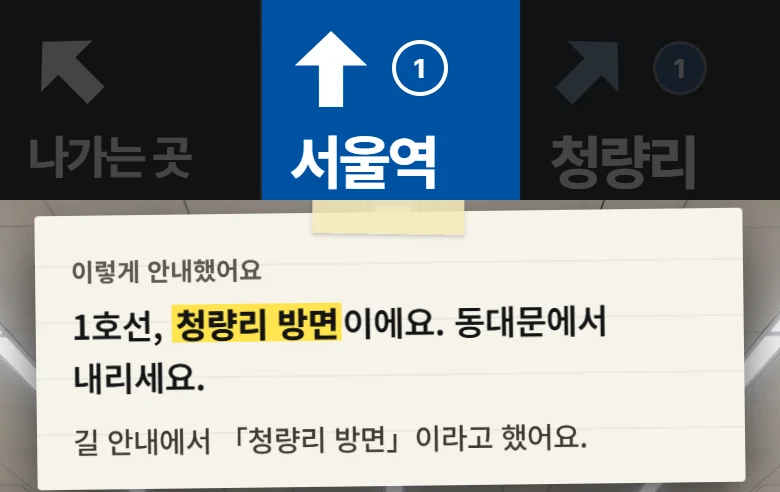
2Decision record
- What it readTrail · records
- Missed several announcement questions
- What it pickedCore · decides
- Listening to short instructions, firstGoal the learner chose: TOPIK I exam prep
- WhyVellum · explains
- Missed recently, and tied to the chosen goal
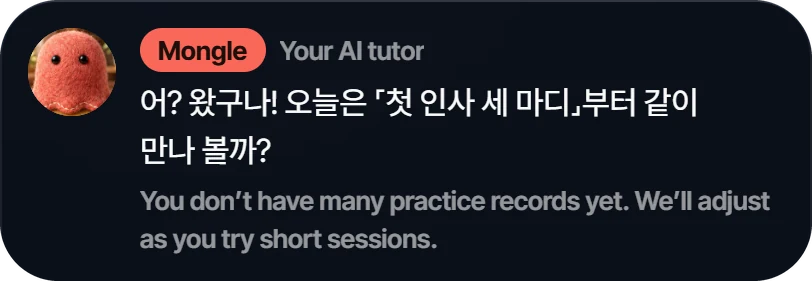
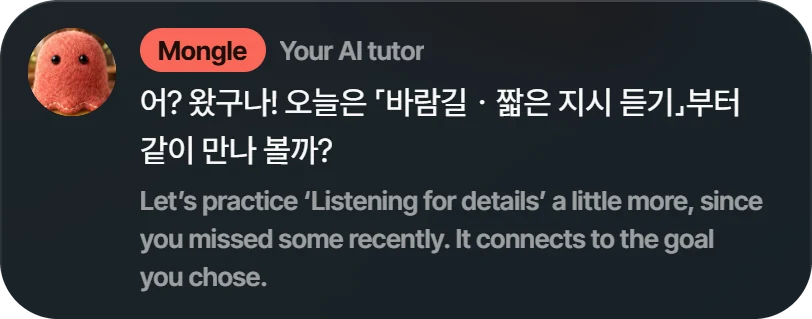
3Changed suggestionTutor card
Day one: “Three first greetings”
After the missed answers: “Listening to short instructions”
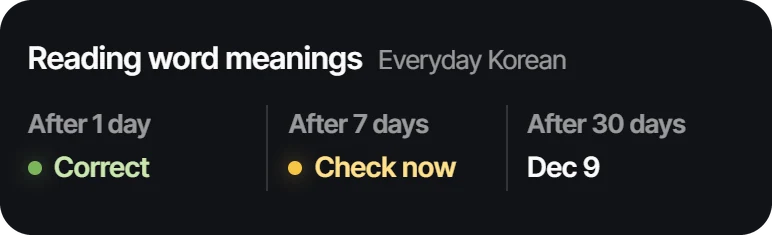
After 1, 7 and 30 days, an unseen question checks if they can now do the missed skill aloneTemper · checks
Why it works this way The real first-lesson question and SYNK WORLD screens · an example learner’s first 30 days
SYNK WORLD · Try it yourself
One answer changes the decision
An example learner
Answers missed in a game changed the next suggestion
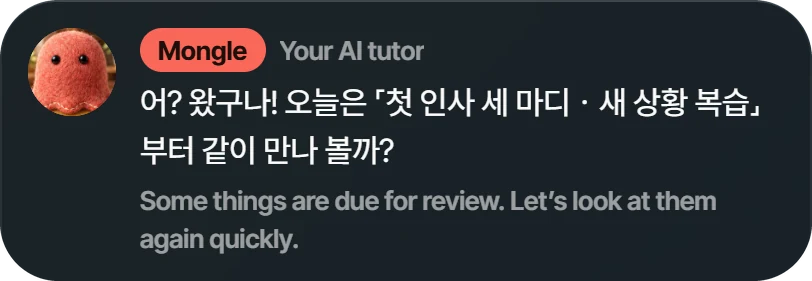
On day one the tutor card said “let’s try something short”. Now it reads the misses and the goal, and brings up that skill.
What the learner sees
Decision recordExample · after a gameHandled by
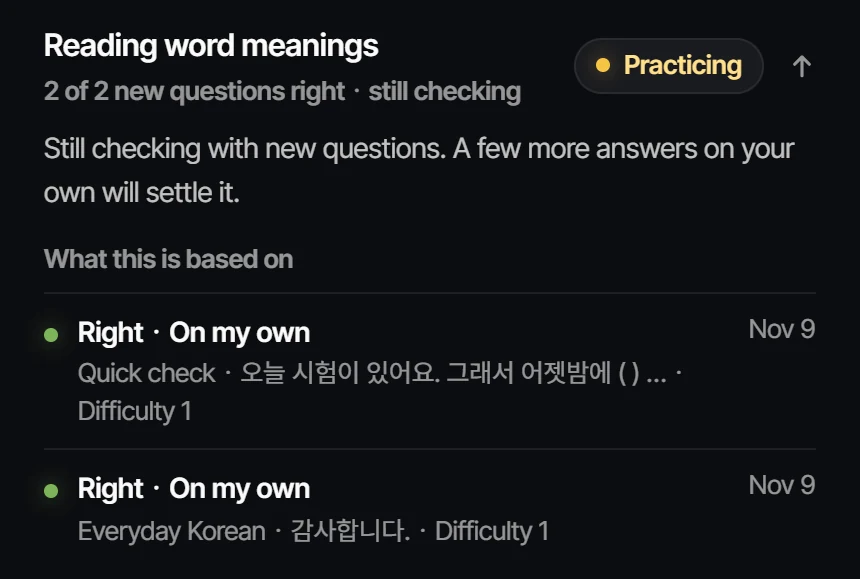
- What it readTrail · records
Day one
No records yetMissed several announcement questions
These answers become “Listening for details” records. Only first answers given without help count
- What it pickedCore · decides
Day one
One short practice to tryListening to short instructions, first
Practice on the missed skill (chosen goal: TOPIK I exam prep)
- WhyVellum · explains
Day one
Few practice records yetMissed recently, and tied to the chosen goal
Vellum turns these two reasons into the tutor card sentence
After 1, 7 and 30 days, an unseen question checks if they can now do the missed skill aloneTemper · checks
- Now
- 1 min
- 1 day
- 7 days
- 30 days
- Record
The real first-lesson question and SYNK WORLD screens · an example learner’s first 30 days
How it comes back
Wrong answers return in a minute. Right ones, just as you’d forget.
Atlas picks your next practice from your misses and your goal. SYNK WORLD keeps the review dates.
How one phrase comes back
If it returns on time and you keep getting it right
Meet againSame phrase, new scene
Check againSame skill, an unseen question
Same time, why more sticks
Cramming feels like knowing it that day. Research keeps finding that recall after a gap lasts longer. SYNK WORLD tracks the gaps.
Spacing effect (Cepeda et al., 2006) · Testing effect (Roediger & Karpicke, 2006). Research, not measured in SYNK WORLD.Without sitting down to study
There’s no review timetable to open. Your tutor speaks first, and re-checks also happen inside games.
No pile-up
Unfinished plans don’t roll over. Reviews come six at a time, and a missed re-check stays “Window passed”.
How it works
Understand, fit, then check
Understand
Look at the goal, the situation and past records — what people said and did, not their age or gender.
Core · Strata · Trail
Fit
Fit content, explanations, screens and sound to the person. They can pick large text or no sound.
Loom · Vellum · Reed
Check
Check they can now do it unaided, and plan from that. Methods that make results worse are not rolled out.
Prism · Temper
Eight engines
No single engine decides everything. Some understand, some present, some check — and each service uses the ones it needs.
- CoreLAB · SHIFT · PATH
Decides what is needed now
Sees the goal and where someone is stuck, sets the next step and help, and records why.
- StrataLAB
Maps what to learn, in what order
Links grammar, expressions and vocabulary by difficulty and order, to pick what to practise again.
- TrailLAB · PATH
Records what changed
Records tasks, help used and how answers change.
- LoomLAB · PULSE
Responds to touch
Screens and characters react as you tap or drag.
- VellumLAB · SHIFT
Explanations people understand
Fits explanations and hints to the task and the answer: why this practice, what to check when stuck.
- ReedLAB · PULSE
Music and sound for the scene
Handles music and sound for works and lessons, and turns it down when focus matters.
- PrismLAB · SHIFT
Finds patterns across many results
Finds common difficulties across many results and shows which content and explanations need work.
- TemperLAB · SHIFT · PATH
Checks whether it helped
After a hint or practice, checks if the person can now do it alone, then improves the tasks and help.
By goal
When the goal changes, the practice changes
The same Korean needs different practice for a university interview, a meeting, a job interview or a family chat. Atlas follows your goal and recent results, not your age.
Studying abroad
Explaining your major and why
- Check your level — Explain your major and why, and find where you get stuck.
- Targeted practice — Practise linking your experience to your major.
- Try again — Check you can explain it without hints.
At work
Reporting progress in a meeting
- Check your level — Report on last week; spot trouble with dates and numbers.
- Targeted practice — Put a report in order using common reporting phrases.
- Try again — Check you can deliver it in a minute without notes.
Job interview
Getting your experience across
- Check your level — Pick one project and say what you did.
- Targeted practice — Link situation, action and result; prepare for follow-ups.
- Try again — Check you can use the same experience for other questions.
Family and neighbours
Catching up and sharing news
- Check your level — Greet someone, ask after them, and see if honorifics trip you up.
- Targeted practice — Share news in two or three sentences, in the right tone.
- Try again — Check you can keep going when they ask back.
These are design examples.
Where it runs
Where Atlas runs today
Ask
Ask us anything
Questions about what we have published are answered right here. For consultations and proposals, email us.
The contact form opens in Google Forms in a new tab.
Common questions04
We do not save the conversation. Please do not include personal information.